L Bar Monitoring Prism vs Circular Monitoring Prism: Which Is Better?
L Bar Monitoring Prism vs Circular Monitoring Prism – A Head-to-Head Comparison
Installation and Mounting Flexibility
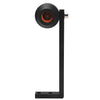
The L Bar Monitoring Prism excels in installation flexibility. Its L-shaped bracket allows for secure mounting on walls, structures, building facades, foundation slabs, and retaining walls. It can be used on flat surfaces for temporary setups or permanently attached for long-term monitoring. The dual mounting holes provide additional installation options.
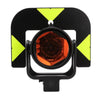
In contrast, the Circular Monitoring Prism typically requires threaded bolt installations. While this works well for certain applications, it offers less flexibility in terms of mounting locations and orientations.
Winner: L Bar Monitoring Prism – superior mounting flexibility for diverse monitoring scenarios.
Accuracy and Measurement Performance
Both prism types offer high accuracy, but the L Bar Monitoring Prism generally provides superior precision for deformation monitoring. With accuracy ratings of 2 arc seconds, L Bar prisms are specifically optimized for precision monitoring applications. The L-bar mounting system provides excellent stability, ensuring consistent signal return and reliable data collection.
Circular monitoring prisms can achieve sub-millimeter accuracy and are suitable for deformation monitoring. However, studies have shown that circular prisms can adversely influence angle and distance measurements depending on orientation and alignment.
Winner: L Bar Monitoring Prism – more consistent accuracy for critical monitoring applications.

Environmental Durability
The L Bar Monitoring Prism is built to withstand harsh environmental conditions. With hermetically sealed construction, anodized aluminum housing, and waterproof/dustproof design, these prisms are ideal for permanent outdoor installation in any weather. Some models feature waterproof rings and water-resistant rear sealing for enhanced environmental protection.
Circular monitoring prisms also offer good durability, with some models including built-in filters to prevent condensation. However, they generally lack the same level of sealed construction found in premium L Bar prisms.
Winner: L Bar Monitoring Prism – superior environmental protection for long-term outdoor deployment.
Application Suitability
The L Bar Monitoring Prism is specifically designed for:
Structural monitoring
Bridge monitoring
Tunnel monitoring
Building settlement monitoring
Railway monitoring
Dam monitoring
Ground movement monitoring
Deformation analysis
The Circular Monitoring Prism is commonly used for:
Mining applications
Slope stability monitoring
Long-range measurements
General surveying applications

Winner: L Bar Monitoring Prism – more versatile and purpose-built for structural and deformation monitoring.
Core Advantages of the L Bar Monitoring Prism
Based on the comparison above, here are the core advantages of choosing an L Bar Monitoring Prism for your monitoring projects:
Superior mounting flexibility – install on walls, structures, or flat surfaces with ease
Exceptional accuracy – 2 arc second precision for reliable deformation data
Outstanding durability – hermetically sealed, waterproof, and dustproof construction
Long-term stability – designed for permanent installation in demanding environments
Versatile compatibility – works with Leica, Trimble, Topcon, and other total stations
Compact and low-profile – unobtrusive design minimizes visual impact
Wide application range – ideal for bridges, tunnels, dams, railways, buildings, and more

Summary
In the debate of L Bar Monitoring Prism vs Circular Monitoring Prism, the L Bar Monitoring Prism emerges as the superior choice for most deformation monitoring and structural surveying applications. While circular monitoring prisms offer excellent long-range capabilities and are suitable for general surveying tasks, the L Bar Monitoring Prism provides unmatched mounting flexibility, superior accuracy, and exceptional environmental durability.
Contact Us Today
Whether you need prisms for bridge monitoring, tunnel deformation analysis, or structural health monitoring, we have the solutions you need.
Contact SMTOER today for competitive pricing, expert advice, and fast shipping. Let us help you achieve the precision and reliability your projects demand.
What to Consider When Buying an L Bar Monitoring Prism?
Prism accuracy – Verify the accuracy specifications. Look for prisms with at least 2 arc second accuracy for precision monitoring applications.
Prism constant compatibility – Confirm the prism constant required by your total station. L Bar prisms typically offer +8.9 mm for Leica and -25.5 mm for Trimble/Topcon systems.
Material quality – Choose prisms with anodized aluminum or die-cast aluminum construction for maximum durability.
Environmental protection – Ensure the prism is hermetically sealed and waterproof/dustproof for outdoor use.
Mounting options – Check for dual mounting holes and flexible installation configurations.
Coating type – Copper-coated and silver-coated prisms offer different reflectivity characteristics; choose based on your specific measurement requirements.
Measurement range – Verify the working range meets your project requirements (typically up to 2,000 meters for L Bar prisms).
L Bar Monitoring Prism FAQ
Q1: What is the difference between an L Bar Monitoring Prism and a circular monitoring prism?
An L Bar Monitoring Prism features an L-shaped bracket for secure wall or structure mounting, while a circular monitoring prism typically mounts on threaded bolts. The L Bar design offers superior installation flexibility and is specifically optimized for deformation monitoring applications.
Q2: How far can an L Bar Monitoring Prism measure?
Most L Bar Monitoring Prisms have a measurement range of up to 2,000 meters (approximately 6,600 feet), depending on the total station and environmental conditions.
Q3: Are L Bar Monitoring Prisms waterproof?
Yes, premium L Bar Monitoring Prisms feature hermetically sealed, waterproof, and dustproof construction, making them suitable for permanent outdoor installation in any weather.
Q4: What prism constant should I use for my L Bar Monitoring Prism?
The prism constant depends on your total station. For Leica instruments, use +8.9 mm; for Trimble and Topcon, use approximately -25.5 mm. Always verify with your specific prism model.
Q5: Can I use an L Bar Monitoring Prism for temporary installations?
Yes, an L Bar Monitoring Prism can be placed on flat surfaces for temporary use or securely attached to walls and structures for permanent installation.