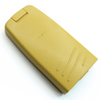
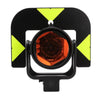
Machine Control Receiver: Transforming Toughness into Ease, Making Construction in Complex Terrain a breeze
In traditional construction, complex and varied terrain—such as steep slopes, hills, ravines, or rugged sites—has always been a major challenge restricting efficiency and accuracy. Manual measurement, repeated marking, and experience-based robotic operation are not only time-consuming and labor-intensive but also prone to cumulative errors, leading to cost overruns and project delays. The Machine Control Receiver is revolutionizing this situation. This cutting-edge device, integrating high-precision GNSS, inertial navigation, and intelligent control algorithms, provides construction machinery (such as excavators, bulldozers, and graders) with real-time three-dimensional spatial coordinates and design data, enabling the machinery to "sense" its own position and attitude, achieving intelligent and automated operation. Essentially, the Machine Control Receiver is like equipping heavy machinery with an "autonomous driving brain," allowing the driver to precisely control every movement of the bucket or cutter in complex three-dimensional space from the cab, making what was originally difficult and dangerous construction as simple and safe as navigating flat terrain.
Is a Machine Control Receiver Really Effective?
High-Precision Positioning and Real-Time Feedback are Key
Many users initially question: Can a single receiver truly enable machinery weighing tens of tons to operate with centimeter-level precision in complex terrain? The answer is yes. Its effectiveness is built upon the integration of multiple technologies:
Multi-Satellite Multi-Frequency GNSS Technology: Modern high-precision Machine Control Receivers can simultaneously receive signals from multiple satellite systems such as GPS, GLONASS, BeiDou, and Galileo. Using multi-frequency technology, it significantly reduces ionospheric interference, providing real-time, stable, centimeter-level (RTK) positioning data even in partially obstructed construction environments.
Inertial Measurement Unit (IMU) and Tilt Sensor: This is crucial for handling complex terrain and dynamic machinery movements. The IMU continuously measures the machine's pitch, roll, and yaw angles, compensating for position data lost due to machine movement, vibration, or brief GNSS signal loss, ensuring the actual position of the bucket tip remains synchronized with the 3D design model.

Integration of 3D Digital Design Model: Before construction, the engineering design drawings (such as earthwork volume, slope, and elevation) are imported into the control system to form a 3D digital model. The Machine Control Receiver compares the real-time position of the machinery with this "digital twin" model, visually displaying the difference between the current position and the target design surface (e.g., "0.15 meters of excavation required") on the cab screen, guiding the driver or directly and automatically controlling the machinery's actions.
Extensive Compatibility: More Than Just a Single Machine
"Compatibility with multiple engineering machines and systems" is one of its core values. A high-quality Machine Control Receiver system typically features a highly open and modular hardware and software platform design. It can seamlessly adapt to various brands of excavators, bulldozers, graders, pavers, etc. More importantly, it can interface with data formats generated by mainstream 3D design software (such as AutoCAD Civil 3D, Bentley, etc.) and supports collaborative operation with traditional surveying tools such as total stations and laser scanners, ensuring smooth data flow from design to construction, forming a complete digital construction closed loop.
Key Considerations When Choosing a Machine Control Receiver
Core Accuracy and Reliability: In complex terrain, system stability is more important than theoretical maximum accuracy. Focus on its actual performance and fixation rate in environments with trees, building obstructions, or multipath interference.
System Integration and Ease of Use: Evaluate its installation complexity, the intuitiveness of the cab interface, and the difficulty of training. A good system should be easy to learn quickly, reducing the operator's learning curve.

Machine Compatibility and Scalability:Confirm that the target vendor's system supports your existing or planned machine brands and models. Also consider the possibility of adding machinery or upgrading functionality in the future.
After-Sales Service and Technical Support:High-precision equipment requires strong after-sales support. Choosing a Machine Control Receiver vendor that provides localized, rapid-response technical support, regular calibration, and software updates is crucial.
Summary:
In conclusion, the Machine Control Receiver is not just a flashy marketing concept, but a revolutionary tool proven in countless complex projects worldwide, effectively transforming construction from an "experience-driven" to a "data-driven" approach. Its core advantages lie in digitizing complex terrain, visualizing the construction process, and precisely controlling operations, directly resulting in multiple benefits such as reduced material waste, shorter construction periods, lower labor costs, and improved operational safety.
If you are committed to enhancing your team's competitiveness in challenging projects and seeking to elevate construction efficiency and precision to a new level, then investing in a reliable Machine Control Receiver system would be a strategic decision. We strongly recommend that you contact smtoer, a leading manufacturer of Machine Control Receivers in the industry.