Why 360° Reflector Mini Prism Is Essential for Modern Surveying Applications?
Whether you are setting out a building foundation, monitoring deformation on a bridge, or conducting a topographical survey for a highway, the equipment you choose directly impacts productivity and data quality. Among the most transformative yet underrated tools is the 360° Reflector Mini Prism. This small, lightweight prism allows total stations to track a rover from any horizontal angle without needing to re‑point or rotate the prism manually.
Professional surveyors have moved away from single‑face prisms for many robotic applications. The reason is simple: a 360° Reflector Mini Prism provides continuous, uninterrupted reflection regardless of the direction the surveyor is facing.
What Is a 360° Reflector Mini Prism and How Does It Work?
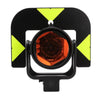
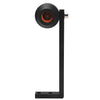
A 360° Reflector Mini Prism is a multi‑faceted prism assembly, typically comprising six or eight individual glass prisms arranged in a ring or a pyramid. Unlike a standard single prism that must be pointed directly at the total station, a 360° mini prism reflects the EDM (electronic distance measurement) beam from almost any horizontal direction – usually a full 360° coverage with a minimal vertical angle range.
The Technology Behind It
Each small prism inside the assembly is coated with a highly reflective layer. When the total station’s laser hits any of these prisms, it returns a strong signal. The “mini” designation refers to its compact size – often 30 mm to 50 mm in diameter – making it easy to mount on a rover pole or a tripod. The result: the instrument can track a moving prism automatically without losing lock, which is the basis of robotic total station surveying.
Why the 360° Reflector Mini Prism Is Indispensable for Modern Surveying?
1. Uninterrupted Robotic Total Station Tracking
With a single prism, the surveyor must constantly ensure the prism faces the instrument. Turn the pole slightly, and the signal is lost. The 360° Reflector Mini Prism eliminates this problem. The robotic total station can follow the prism as the surveyor walks around a site, even if the surveyor turns around to avoid an obstacle. This means fewer “lost target” events and higher daily point counts.
2. Faster Layout and Staking Out
When staking out points for roads, pipes, or building corners, the surveyor moves from one stake to the next. With a 360° Reflector Mini Prism mounted on the rover pole, there is no need to pause and rotate the prism. The instrument continues tracking. For a typical 200‑point layout, this saves 30–40 minutes of unnecessary handling, directly boosting crew efficiency.

3. Ideal for One‑Person (Robotic) Crews
Many modern surveying firms run one‑person crews – the surveyor operates the data collector while the total station follows the prism automatically. That workflow depends entirely on a 360° Reflector Mini Prism. Without it, the surveyor would constantly walk back to the instrument or use a cumbersome active target. The mini prism’s passive, no‑battery design makes it lightweight and maintenance‑free, perfect for solo operators.
4. Compact, Lightweight, and Durable
Traditional 360° prisms used in the past were heavy, bulky, and expensive. Today’s 360° Reflector Mini Prism models (like those from SMOTER) weigh as little as 150–200 grams. They fit inside a pocket or a small case. The housing is made from rugged ABS or metal, with O‑ring seals to keep out dust and moisture. They survive drops, mud, and extreme temperatures from –20°C to +50°C.
5. High Accuracy Over Short to Medium Ranges
Single prisms are often preferred for very long ranges (over 800 m). However, for 90% of daily construction and topographic work – ranges from 2 m to 300 m – a 360° Reflector Mini Prism delivers millimeter‑level accuracy. The prism constant is known and can be entered into the total station. Leading brands like SMOTER produce mini prisms with ±2 mm precision, more than enough for building and road projects.
6. Compatible with Most Total Stations
The 360° Reflector Mini Prism uses a standard 5/8″ x 11 thread or a quick‑release clamp. It fits Leica, Trimble, Topcon, Sokkia, and other robotic instruments. SMOTER models include adapters for different pole diameters, so you can switch between a mini prism and a standard single prism in seconds.
Real‑World Surveying Applications Requiring a 360° Reflector Mini Prism
Building construction layout – Set out columns and walls without re‑orienting the prism.
Road and highway staking – Walk along the alignment; the total station tracks from the side.
As‑built surveys – Quickly collect points inside rooms or under structures where the surveyor must turn frequently.
Monitoring and deformation – Leave the mini prism on a monitoring point; the instrument measures repeatedly from any angle.
Stockpile volumes – Walk around a pile while the prism always faces the instrument.
Utility mapping – One person moves along a utility alignment while recording points.
Buying Guide – Important Notes When Purchasing a 360° Reflector Mini Prism
Before you buy, check these 5 points:
Prism constant – Most 360° mini prisms have a constant of 0 mm or 17.5 mm. Ensure your total station allows you to enter that value. SMOTER products come with a certificate.
Horizontal coverage – Some cheaper “360°” prisms have blind spots (e.g., only 300°). Look for true 360° or at least 350°.
Vertical acceptance angle – For sloped terrain, you need ±20° to ±30° vertical coverage.
Mounting system – Does it fit your rover pole (usually 5/8″ thread or 25‑30 mm clamp)? SMOTER includes adapters.
Durability – Check for sealed housing (IP65 or IP67) and shock‑resistant glass. Avoid open‑frame designs that collect dirt.
Avoid no‑name prisms that claim 360° but use low‑quality glass – they will cause weak signals and frequent “lost target” errors.

Frequently Asked Questions (FAQ)
Q1: Can I use a 360° Reflector Mini Prism with a non‑robotic total station?
A: Yes, but you will not benefit from automatic tracking. It still works as a normal prism but allows you to face any direction – helpful for manual work.
Q2: What is the typical range of a 360° Reflector Mini Prism?
A: For most robotic total stations, reliable range is 150–300 m in good visibility. Some high‑end instruments can track up to 500 m. For longer distances, use a standard single prism.
Q3: Does the mini prism need calibration?
A: No. The prism constant is factory‑set. However, you should periodically clean the glass and check for cracks.
Q4: Is the 360° Reflector Mini Prism compatible with all rover poles?
A: Yes, if you choose the correct adapter. SMOTER provides a universal clamp and a 5/8″ thread base that fits 99% of poles.
Conclusion
While single prisms still have a place in long‑range control networks and precise traversing, the 360° Reflector Mini Prism is the undisputed champion for daily construction, layout, and as‑built surveys. Its ability to provide a constant, strong reflection from any direction unlocks the full potential of robotic total stations. Surveyors can work faster, safer, and more accurately. If you are still using a single prism for routine work, you are leaving efficiency on the table. Upgrade to a 360° Reflector Mini Prism and experience the difference on your next site.