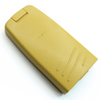
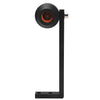
How L-Bar Monitoring Prisms Help Contractors Reduce Equipment Costs and Increase Productivity?
For construction contractors, every dollar spent on survey equipment and every hour lost to rework directly cuts into profit margins. While robotic total stations and GNSS systems are powerful, they are also expensive to buy, calibrate, and maintain. There is a simpler, more cost-effective solution: the L-Bar Monitoring Prism.
When paired with a manual total station, an L-Bar monitoring prism allows crews to achieve sub-centimeter accuracy without investing in high-end automation.
The Hidden Equipment Costs That L-Bar Monitoring Prisms Eliminate
Many contractors assume they need a robotic total station for every grade check or deformation survey. However, a cost-effective L-Bar monitoring prism for manual total stations can perform the same point monitoring at a fraction of the cost. Here’s what you save:
No expensive robotic servos: Manual total stations (or even a good theodolite) work perfectly with an L-bar prism because the L-shaped bracket holds the prism stable while the operator reads angles manually.

Reduced equipment rental: Instead of renting a $15,000 robotic station for a month, buy three L-Bar prisms for under $200 each and use your existing laser level.
Lower repair and calibration fees: A solid L-Bar prism has no electronics—drop it, clean it, and it still works. No annual calibration contract required.
For small to mid-sized earthwork or concrete contractors, the L-Bar monitoring prism for slope staking and foundation alignment pays for itself after just one week of use.
Productivity Gains: How a Simple Prism Speeds Up Daily Workflows
Productivity on a construction site is not about moving faster—it’s about reducing setup time and re-measurement. The quick-mount L-Bar monitoring prism with magnetic base allows a single worker to:
Attach the prism to rebar, formwork, or a steel column in seconds.
Take a reading from a total station without a second person holding a rod.
Move the prism to the next point and repeat, cutting measurement time by 40% compared to traditional prism poles.
Moreover, because the L-bar design maintains a fixed offset (usually -30mm or -34mm), there is no need to calculate rod height corrections every time. This is especially valuable for repetitive vertical settlement monitoring on bridge piers or retaining walls. One contractor reported reducing daily monitoring from 2 hours to 45 minutes by deploying five L-Bar prisms at fixed locations and using a single total station .
Case Study: Saving $4,200 per month with L-Bar Prisms
A Midwest grading contractor was using two robotic total stations on a 30-acre residential development. The rental cost was $2,800 per machine per month. After switching to a total station (already owned) and ten rugged L-Bar monitoring prisms for outdoor construction, they eliminated both rentals. The laser provided elevation control, while the prisms allowed one man to check cut/fill stakes quickly. Monthly equipment cost dropped from $5,600 to $1,400 (laser maintenance and prism replacement). That is a 75% reduction.

Key Considerations Before Purchasing an L-Bar Monitoring Prism (Checklist)
Before you add an L-Bar monitoring prism to your tool inventory, evaluate these five aspects to ensure you get the best value and longevity:
Prism material and accuracy class: For general construction (mm tolerance), acrylic prisms are cheaper and adequate. For precise machine control or bridge monitoring, choose a glass prism with ±2″ accuracy.
Mounting options: Look for a model that includes both a rare-earth magnetic base and a threaded 5/8″-11 insert. This covers rebar, steel beams, and standard tripods.
Durability rating (IP and impact): Construction sites are dusty and wet. An IP65 or IP67 rating ensures the prism housing does not fog internally. Also check if the L-bracket is made of anodized aluminum or stainless steel—stainless resists bending.
Target constant availability: Every L-Bar prism has an offset (e.g., -30mm, -34mm, 0mm). Verify that your laser receiver or total station data collector has a user-adjustable prism constant field. Many budget lasers do not allow custom constants; in that case, buy a “0mm constant” L-bar prism.

Summary
To summarize, contractors who adopt L-Bar monitoring prisms lower their equipment overhead by avoiding robotic total station rentals, reduce labor hours through faster point setups, and improve measurement consistency with fixed offsets.
Whether you are doing foundation layout, slope monitoring, or formwork alignment, a cost-saving L-Bar monitoring prism for manual survey methods is one of the simplest productivity tools available. It does not require special training, batteries, or cloud subscriptions—just a stable mount and a clear line of sight.